BJJ and the Body: What Time on the Mat Teaches You
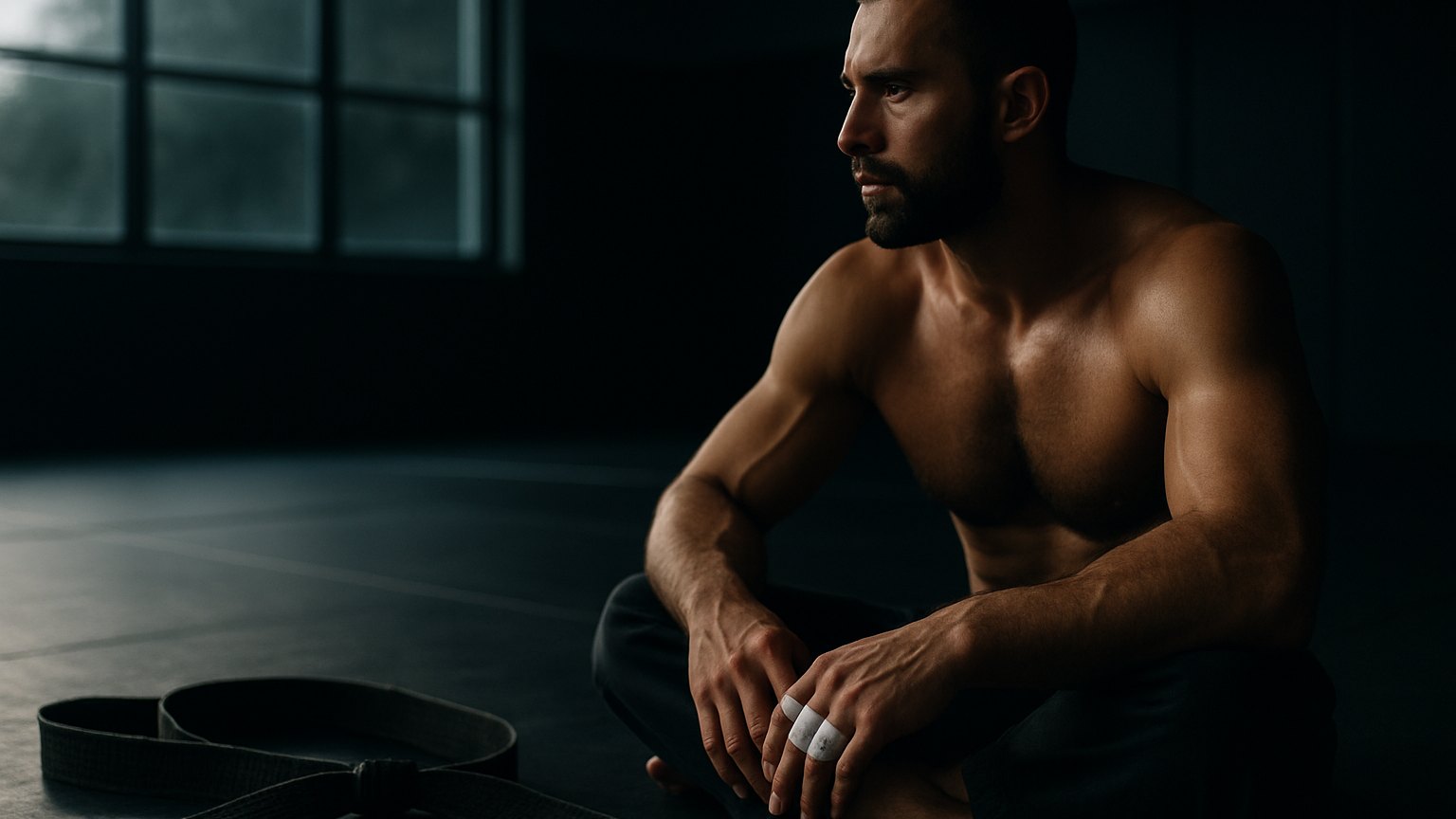
The mat teaches the truth fast. If your posture is weak, it folds. If your breathing is sloppy, it betrays you. If panic shows up, everything gets worse from there.
That is why years in jiu jitsu teach more than technique. They teach what the body does under pressure. Not in theory. Not in a podcast clip. In contact. In exhaustion. In positions where comfort is gone and excuses do not matter.
The lesson is bigger than fighting. The body you build on the mat is the same body you bring into work, family, pain, conflict, and recovery. Pressure is pressure. The environment changes. The nervous system does not.
If you understand what the mat is teaching, you stop seeing training as recreation. You start seeing it as education.
Pressure Exposes the Leaks
A lot of men look solid until real pressure arrives. Then the leaks show. The shoulders rise. The jaw tightens. The breath gets short. Decision-making gets frantic. Energy burns fast.
Jiu jitsu exposes that immediately. You cannot hide from bad mechanics when another body is on top of you. You cannot fake efficiency when your movement is wasteful. You cannot talk your way out of a bad position. The body has to solve the problem.
That is valuable because most men live far from honest feedback. Their work lets them bluff. Their habits let them drift. Their routine stays soft enough that the system never gets tested. The mat removes that luxury. It shows you where you tense, where you rush, and where you break structure the moment discomfort arrives.
That is not punishment. That is information. Honest information is one of the fastest ways to rebuild anything.
Breath Is Not Optional Under Load
One of the first lessons the mat teaches is that panic is expensive. You burn through energy, lose position, and make bad decisions in a hurry. Most of that starts with breath.
When the breath gets ragged, the mind gets noisy. When the mind gets noisy, technique disappears. This is true in training and outside it. A hard conversation, a business setback, a painful moment in life — the first collapse usually happens in the nervous system, not in the circumstance itself.
That is why breath control matters. Not as a spiritual accessory. As a way to stay usable when pressure lands. Breathwork is nervous system control for the same reason jiu jitsu punishes frantic breathing. The body performs better when it gets a clear signal that you are still in command.
The mat teaches that signal through consequence. If you lose your breath, you usually lose everything attached to it.
Grip, Posture, and Position Are Real Strength
Years on the mat change how you think about strength. It stops being about display. It becomes about function.
Grip matters because weak hands make the whole chain less reliable. Posture matters because collapsed posture turns every exchange into a rescue mission. Position matters because force applied from the wrong place is just effort without leverage.
This is why mat training carries into kettlebells so well. The body learns to create force from the ground up instead of isolating pieces. It learns to connect hips, trunk, shoulders, and hands into one system. Read Grip Strength Is a Longevity Marker if you want a reminder that strong hands are not cosmetic. They are one of the clearest signs that the whole machine still works.
The mat also teaches humility about load. More force is not always the answer. Better angle, better timing, better pressure, better structure — those usually win first.
Technique Is Just Organized Calm
People talk about technique like it is separate from mindset. It is not. Good technique is what calm looks like in motion.
A man who stays organized under pressure can feel what is happening sooner. He does not waste movement. He does not chase strength where structure would solve the problem. He does not turn every hard moment into an emergency.
That matters even more when the body has limitations. If pain shows up, if mobility changes, if some part of the system is compromised, calm becomes even more valuable. You adapt better when you are not fighting reality. Training around nerve damage follows the same principle. The goal is not to dominate the body with ego. The goal is to work with reality, keep the system online, and build from there.
The mat rewards that attitude. It punishes the opposite. Force without awareness gets tired. Ego without structure gets caught.
The Real Lesson Is Carryover
The point of long-term training is not to become impressive in one room. It is to become more capable in every room.
If the mat teaches you anything worth keeping, it is this: control yourself first. Regulate the breath. Hold your structure. Respect position. Do not panic just because discomfort showed up. That principle works whether you are under pressure in training, in a meeting, or in a season of life that is asking more from you than you wanted to give.
This is why embodied training matters. It gives the body proof. Not ideas. Proof. Proof that pressure can be met. Proof that calm can be practiced. Proof that skill matters more than drama.
Take that lesson off the mat. When something tightens in your life, do not make it bigger with chaos. Fix your posture. Slow the breath. Find the position. Apply force only after structure is back. Repeat that long enough and training stops being a hobby. It becomes a way to live.
The Rebuild Protocol
For high-performing men who have tried everything else. Pain down. Strength back. Edge restored. Apply to discuss fit, structure, and next steps.
Apply Now →About the Author: Cam Cordin coaches men online worldwide. Author of Savage Chill: Die to Live.